Tag Archives: GOTY

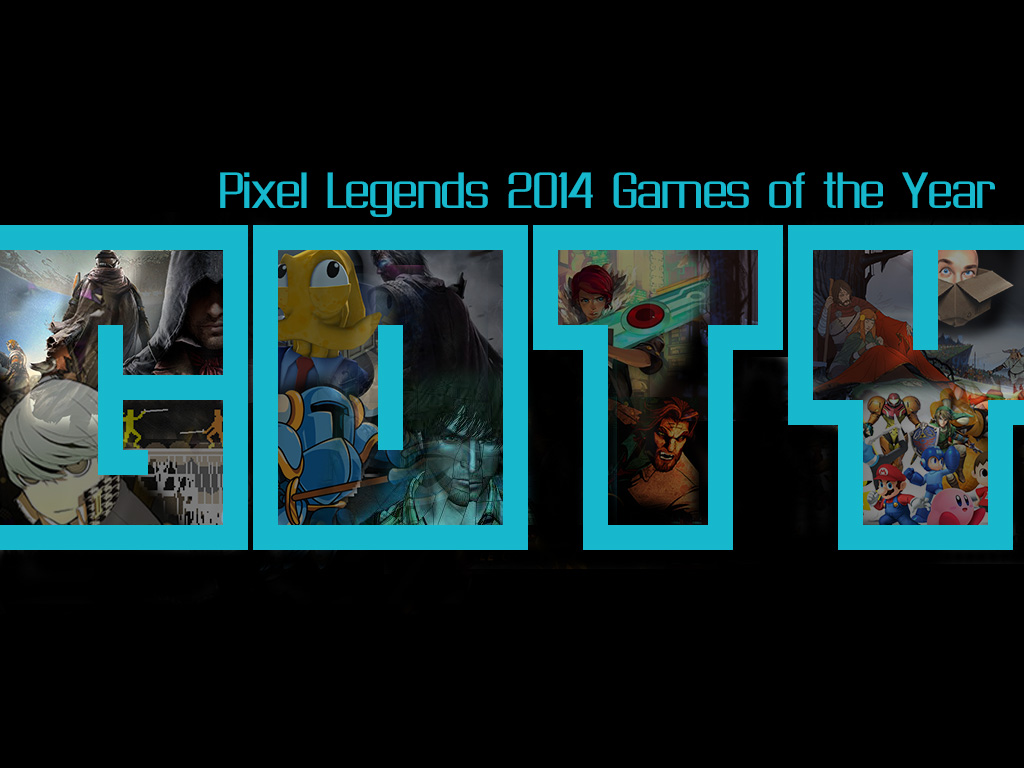
Pixel Legends’ GOTY Central

Welcome! Glad you decided to stop by. Above is a video of the recap of Pixel Legend’s Game of the Year choices.

If you want to know how we came to those choices take a look at our podcast episode here.

Below we’ve gathered all of our editor’s personal Game of the Year Articles for you to read:

Ethan—Bayonetta 2, Runner Up: P.T.

Ricardo—Super Smash Bros. for 3DS, Runner Up: The Wolf Among Us

Matt—The Banner Saga, Runner Up: Middle-earth: Shadow of Mordor

Anders—Middle-earth: Shadow of Mordor, Runner Up: Destiny

Westin—Middle-earth: Shadow of Mordor, Runner Up: Watch_Dogs

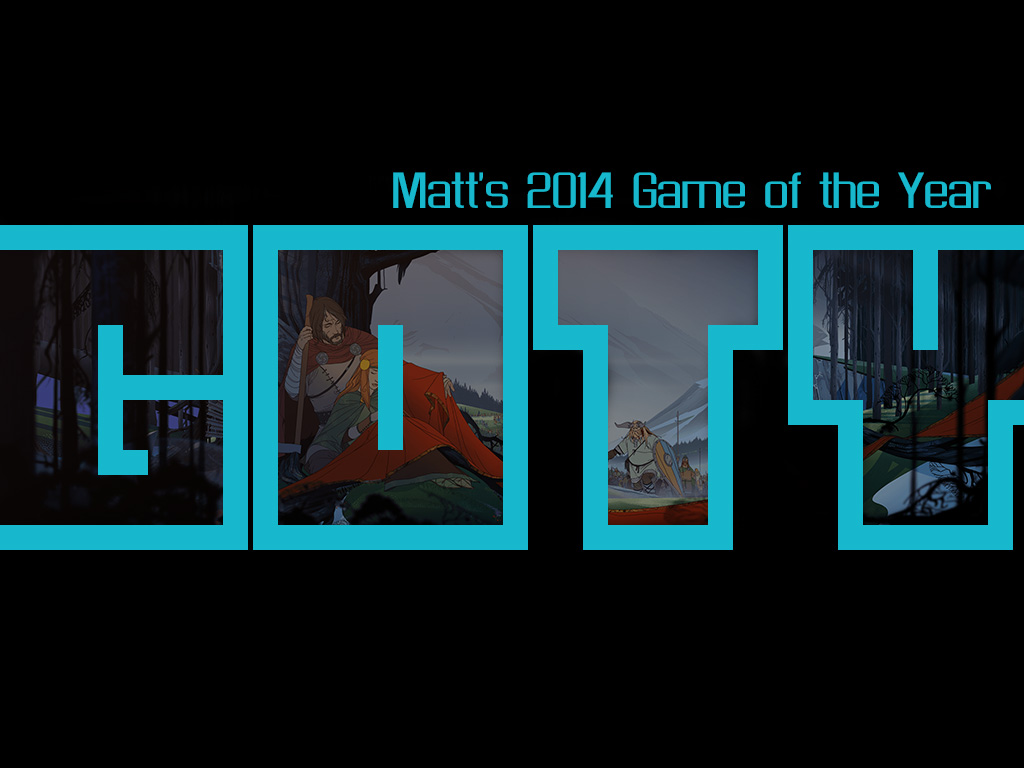
GOTY 2014 — Matt: The Banner Saga

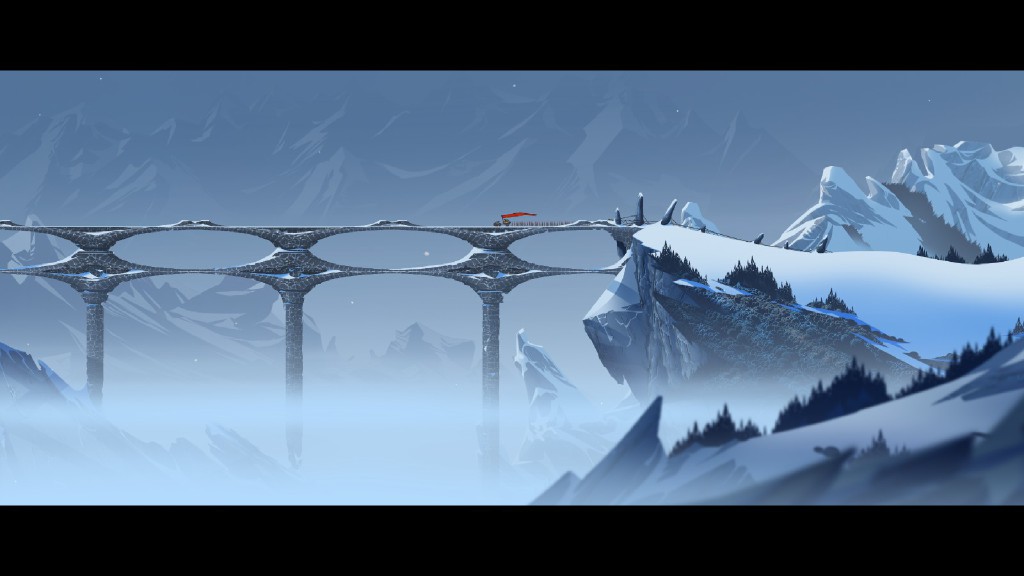
There are some games that are quite simply breathtaking to behold. The Banner Saga is clearly one of those games. No one can deny the art of the game is simply amazing, and there isn’t a game that looks like anything close. But to imply it’s all style and no substance does the game a disservice. Behind the beautiful hand-drawn art is a strong tactical RPG pillar, surprisingly supported by a Oregon Trail-esque backbone that holds tough and meaningful plot decisions.

The narrative of The Banner Saga is what sucked me in. As I’ve stated many times before, games with strong stories can be forgiven many faults in my book. As it turns out The Banner Saga has a very decent gameplay system, but it really takes a side seat (and is a bit one note) compared to its thoroughly engaging world and characters.

The world of The Banner Saga is perhaps one of the most truly realized fantasy realms I’ve had the joy of experiences in recent memory. It’s well known that my love of Tolkien, for better or worse, has turned me off a lot of modern fantasy. I find a lot of popular fantasy to be extremely derivative and too easily falls into shallow imitations of Middle Earth. This is especially ironic given my runner-up this year, and I know there are many examples of good and unique fantasy in the world, but I applaud The Banner Saga for standing out and doing something very different from the rest of the crowd.
237990_screenshots_2014-01-16_00001

There isn’t an Elf or Dwarf to be seen here. No orcs, no goblins or trolls. Instead this game goes out of its way to invent a new world with new rules. The gods are dead or gone. The Humans and Varl (horned giants) are trying to maintain their uneasy alliance while the sun has literally stopped dead in the sky. Then, a completely sudden and overwhelming attack from the north by the fearsome and seemingly robotic Dredge destroys the very foundations of the two kingdoms, and displaces hundreds of people. On top of that, as our heroes try to flee for safety with their clansmen, the very world seems to be splitting in two with magic and other unspeakable horrors.

And this is just the main plot. Exploring the map in the game will show that literally every landmark and town and village and shrine and river and bay has a story and a history.

I applaud The Banner Saga for not taking the easy road of “The All-Story”. None of your heroes are “The One.” None of them are at the center of the conflict, none of them are the cause or the stop of the terrible events happening. Your goal isn’t to save the world. Your goal is to survive. Your goal is to escape. Your goal is to just keep your family alive.

And sometimes to survive means making tough choices. Choices that actually matter. Characters can live or die based on what you choose to do. There aren’t many games that have the possibility of main character perma-death, but The Banner Saga pulls no punches. Sometimes it can seem a little unfair to have a choice you made from a menu permanently remove one of your best fighters, but with that said the unfairness just feels like another realistic part of this horrible tale for our main characters.

I will never forget a choice I made near the very beginning of the game to allow a character to join my party. In the second to last chapter that character literally stabbed me in the back, killed two of my other heroes, then forced me into combat with weakened heroes. While I remember feeling totally betrayed by the game at the time, I realized soon afterwards I was supposed to feel betrayed. That character had been planning my downfall since the beginning, it wasn’t that I had no chance to prevent it, but that just like my heroes I let my trust and desires to see the best in people hurt me. Just like could and does happen in a real, messed up world. The game tricked me; it was being unfair, but sometimes life is unfair.

That is a meaningful choice.

The tactical gameplay of The Banner Saga is decent, but it is both too punishing and too simple. Heroes that are knocked down in battle stay wounded and are weakened in later battles until rested. This mechanic is fine once you have enough Heroes to round out your squad but is exceptionally punishing during the beginning of the game, when your pool of fighters is small and weak. I ended up switching the difficulty to avoid the penalty early on as half-team wipes were common. The actual combat itself is fun enough and has a clever mechanic but turns out to not quite be deep enough to carry the whole game, and the frequency of combat dulls this task. It doesn’t help that the game does little to mix up the formula, the very few bosses the game has are usually just bigger enemies, with only one or two encounters having special rules or events needed to complete them.

That said I enjoyed the combat for what it was and had fun mixing up my character’s powers and item upgrades to find the optimal team for tearing through enemies. The choices made during the travel sequences are the most interesting part of the game. As noted above it can sometimes feel unfair to lose out or be punished simply for “picking wrong” until you realize there really are no “right” choices given the state of the world.

Banner_saga_7

Unfortunately The Banner Saga ends on a bit of an unresolved note. And it’s “choose your own ending” choice fell a bit flat for me. It basically amounts to picking one character over the other, and there isn’t really a good reason given for why the choice exists. For all the meaningful choices the game does have, I would have prefered the final sequence to have been pre-written to give the story a better closure. However, the ending was by no means “bad” and I am eagerly awaiting next year’s The Banner Saga 2 (which you may have heard is my Pixel Legends Personal 2014’s 2015 Game of the Year).

This is a game that not only looks amazing, but sounds it too. I barely had time to mention the simply beautiful soundtrack composed by Pixel Legends’ favorite Austin Wintory, but needless to say I’m listening to it as I write this and it is a perfect fit for the somber tone of the game. As you play the game it draws you in with its mood and sound.

With only a few weeks left in the year I decided to try a game that came out at the very beginning of it. The Banner Saga has been sitting in my Steam library since the Summer Sale, but for one reason or another I just never got around to it. One could argue that simply because its the last game I finished this year it’s so high on my personal list, but that’s drastically underselling The Banner Saga. This is a game that sets out what it means to do and hits that target perfectly. It delivers a deep and interesting story through the eyes of believable heroes in a fully realized world. Its a game that makes you attached to the characters and their stories, that makes you feel their losses as if they were your own. There aren’t many games that can say to do that.


Runner Up: Middle-earth: Shadow of Mordor
Middle-Earth-Shadow-of-Mordor-New-Screenshot-shows-various-orc-character-models

What a swing Shadow of Mordor took for me this year. It went from a game I was expecting to be hot garbage to my favorite game in a long time. And then it ended going back the other way a bit by the end of the year. As awesome as Shadow of Mordor is, it’s a bit of a one trick pony. You can see that trick multiple times from a few different angles and be impressed for a while, but once you’ve seen all the nemesis system has to offer, you’ll probably be ready to stop playing.

The story is pretty horrible (not to mention that it dances on Tolkien’s grave with a jackhammer) and the combat and side missions are serviceable. Without the nemesis system (as evidenced by the last-gen versions of the game) the whole thing falls apart.

But the nemesis system is just that good. It feels like the first new gameplay feature that takes advantage of the new consoles, and its a system that I actually can’t wait to see iterated on. Usually games like this might spawn a bunch of clones and make me sigh, but in this case I’m really looking forward to where the nemesis system evolves. The gameplay in this game made it for me this year.
 

GOTY 2014 — Ricardo: Super Smash Bros. for 3DS

2014 was an interesting year in the lifecycle of video games. The seeds of consumers’ discontent were sewn by disappointing offerings by big publishers this year, and though it might not be in 2015 where said publishers learn their lesson, that figurative crop is going to be reaped sooner rather than later.

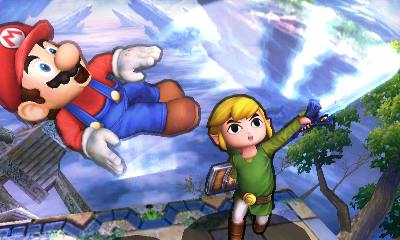
Honestly, I take it as an encouraging sign, not a negative, that so many big games were received so poorly. A lot of that comes from a selfish standpoint —me fighting my own inability to juggle the obligations of being an adult. Thus, I end up resenting games that demands hours upon hours of my time with little emotional or physical payoff.Super-Smash-Bros-3DS-Toon-Link-4

Before I go too far down this introspective road, I guess I should say that my game of the year is Super Smash Bros. for 3DS. I could laud the game for its sharp presentation, highlighting its high production values and amazing soundtrack. I could heap praise on its tight controls and gameplay that strike the perfect balance of accessibility and depth. I could mention how robust its suite of features is impressive for a handheld title.

All that is really inconsequential, though. The reason I love Super Smash Bros., particularly the Nintendo 3DS version over the overall superior Wii U version, is because, well, it helped remind me what it was like to really PLAY a game.

See, more and more I find myself looking to finish games, which leads me to NOT finish them. What I mean by that is I’ll sit down to play a game in the precious free time that I have, play it for a bit, identify (read: assume to understand) all the game has to offer and simultaneously identify whether it’s something I want to waste even MORE of my precious free time on.

Don’t get me wrong. I played a lot of games this year. I just revisited very few after this initial toe-dip.

That’s where the differences lay with my past and present gaming habits and what SSB made me realize. I used to play a game until I was finished with it; whether that was forever or not was up to how much I liked the game. Now I play games until they’re finished with me. A veritable, “are we done here?” posed at every credits screen I reach.

With Smash Bros., I regressed to a previous video gaming life stage (in a good way!). I became that kid again whose only video game choices on a weekday consisted of what carts he had lying around for his Gameboy. I returned to the kid who realized that a video game sans the need for a TV was probably the best thing he’d heard of.

And the kid who didn’t want to stop playing that game.

Runner Up: The Wolf Among Us

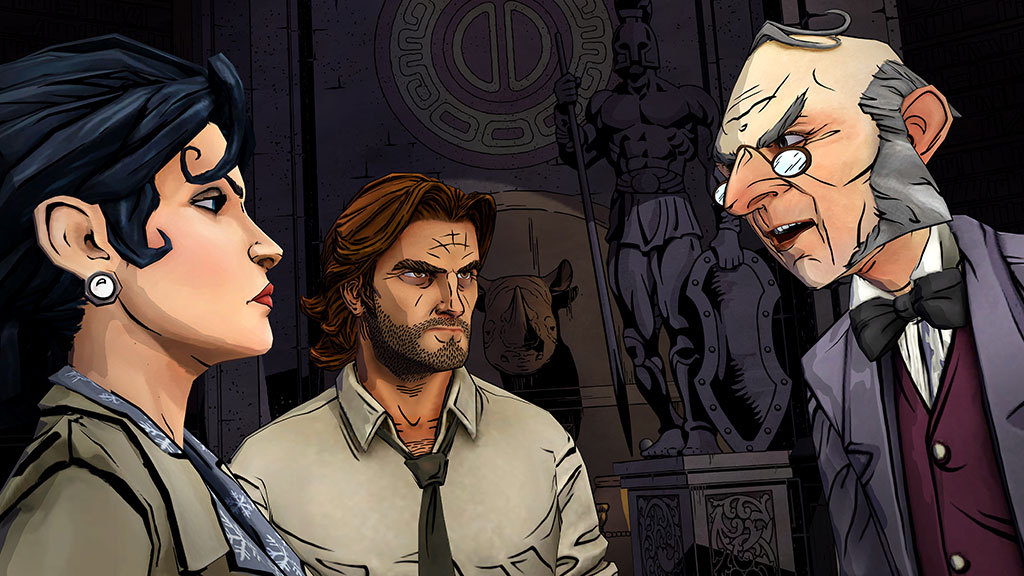
the-wolf-among-us-18211Now, my runner-up for my game of the year has nothing to do with all that, but it does embody the best of what my mature mind can process from video game storytelling. That game is The Wolf Among Us, an exemplary game which shows just how good the folks at Telltale are at weaving a tale.

But more to the point, it is also a masterclass in pacing. Much of that is due to its episodic content, but it’’s also a lost art in gaming today. Maybe that’s just it, and 2014 was a year of me running out of precious time for gaming. Only a few games affected me on an impactful level this year, and maybe that’s because… I’m growing up?


I hope that’s not the case, but that’s why both these games are so significant to me. A simple game that’s just fun– one that puts so much love and effort into being a game that just wants you to play? And to play ANYWHERE? A game you bring over to your friends house, sit on the couch and just play?

That’s a game worth something, and a game worth staying a kid for.


GOTY 2014 — Anders: Middle-earth: Shadow of Mordor


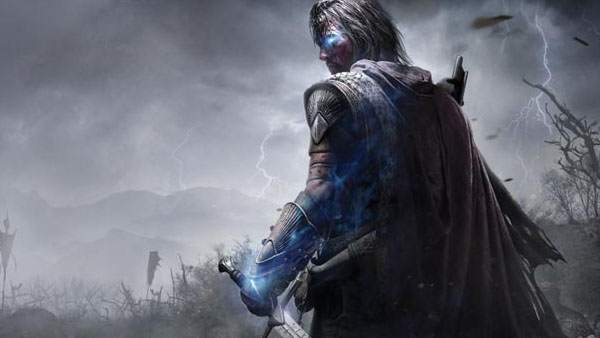
Shadow-of-MordorThis year’s holiday video game release schedule seemed too predictable.

Destiny was set to draw my attention through October, and Call of Duty: Advanced Warfare and Halo: The Master Chief Collection  would dominate a busy November. I’d dive back into Grand Theft Auto V in December and hopefully scratch the surface of Dragon Age: Inquisition by the end of the year.

But I pleasantly surprised by a sleeper hit: My time with Middle-Earth: Shadow of Mordor were some of the best hours I’ve spent this year. This third-person action game offered one of the most enjoyable open-world experiences in recent memory.

My initial expectations for Shadow of Mordor were low. Licensed properties have long been marred by mediocrity, and  the Lord of the Rings name has been scathed by a few of these less-than-deserving entries. But the most recent murderous romp through the badlands of Tolkien’s universe has rekindled a dormant love for third-person swashbucklers.

Shadow of Mordor borrows from genre giants. The speedy parkour platforming is an improvement on Assassin’s Creed’s mechanics, and the free-flowing combat chops follows piggy-backs on the late, great Batman games.

But hacking and slashing hundreds of uruks would be mind-numbing without Shadow of Mordor’s most excellent “nemesis” system.

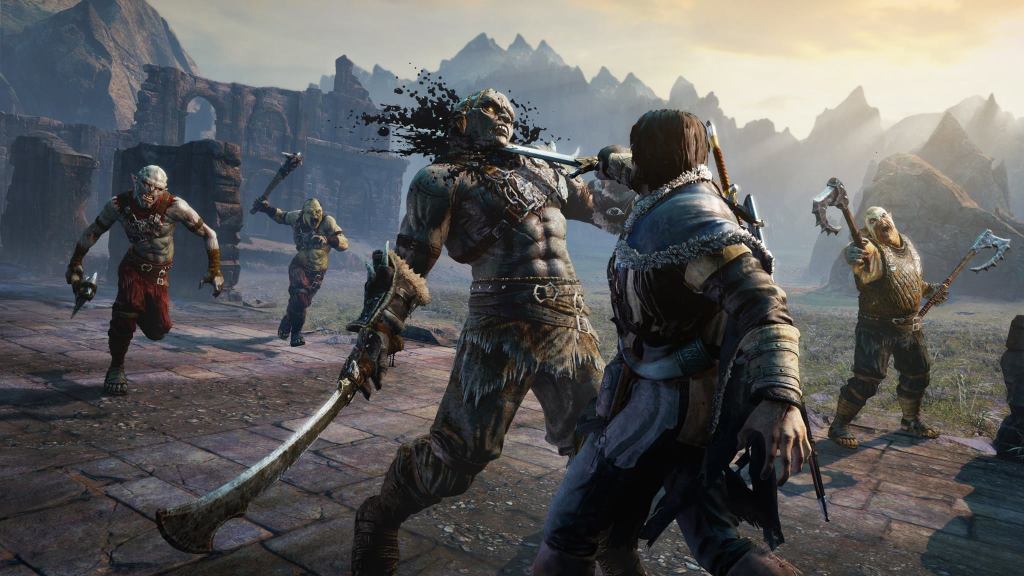
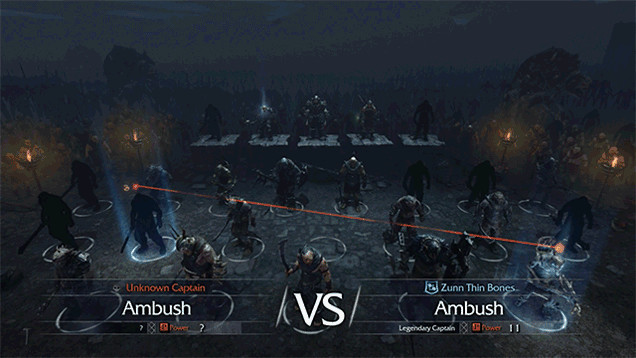
The game randomly generates a hierarchy of uruk officers, each with their own appearances, combat abilities and personalities. Players are free to eliminate enemies as they please, and if an uruk is assassinated, a lower-ranking soldier moves up to fill the power void.

This mechanic kept me invested through the 20-hour campaign. Each battle kicks off with a mini-cutscene in which the uruk captains taunt the player and recall details of the last meeting on the battlefield. The uruks’ appearances change based on how the last fight with the player panned out.

This mechanic brought the bleak world of Mordor to life. The story missions eventually became an after thought as I focused on eliminating as many uruk officers as possible.

It’s fair to assume we’ll see versions of the “nemesis” in other third-person action games.

New-gen gamers would be remiss if they missed the uruk-eradicating glory of Shadow of Mordor.


Runner-up: Destiny

Destiny is half-realized aDestiny_Planett best, but this shoot-and-loot continues to dominate my time and attention months after its September release. I still log on regularly to grab bounties with buddies and run the weekly strikes.
While Destiny doesn’t clinch my “Game of the Year” selection,  it’s impossible to ignore. I’ve spent most of my Fall gaming time leveling my character, guns and gear.

The shooter certainly does a few things right: Destiny’s art direction and gunplay are both sublime. The game’s four main areas are a testament toBungie’s world-building abilities, and nailing headshots on alien foes is immensely satisfying.

But there’s gripes galore, too: Gear drops like drips from a broken faucet, just frequently enough to keep you wide awake at night — I might as well run that daily mission since I’m still online.

The raids, challenging nuggets of endgame content for upper-echelon players, require hours of grinding and farming to access. Many consider raiding one of the best experiences in Destiny, but many players will not progress far enough to access this content.

The greater gaming community has also been captivated by Destiny’s frequent trials and occasional triumphs. November’s AAA flurry of game releases came and went as gamers were busy talking about Destiny’s laundry list of problems and Xur’s weekly offering of exotic gear. Incremental updates continue to dominate the home page of major video game news sites to this day.

I held out a sliver hope that the expansion pack would flesh out Destiny’s barebones offering of endgame content. The paltry set of missions, strikes and a raid barely managed to satiate players’ hunger for more Destiny content.
Still, I continue to log on.

GOTY 2014 — Westin: Middle-earth: Shadow of Mordor


shadow

This is what made Shadow of Mordor so addictiv 

What do you get when you mix solid combat/stealth gameplay and an ever-changing enemy hierarchy with a Middle-earth backdrop?  Well, you get Shadow of Mordor and thank God we did!

What I quickly realized was that Shadow of Mordor was the kind of game that when you stopped playing, all you could think about was when you’d play next.  Well maybe I’m only speaking for myself…  Na, I’m sure everyone felt that way!

One of the game’s highlights was easily the combat, which was extremely smooth and powerful, but never so powerful that you felt unstoppable (i.e. Assassin Creed games in my opinion).  Along with the general 5 – 10 Orc face-offs, the stealth and ranged combat was equally as great.  Stealth kills would yield brutal, yet satisfying death animations while ranged attacks helped to give you some space or close that gap with the transporting kill (or Shadow Strike) upgrade.

While story/characters were okay and graphics were quite good, it was the Orc hierarchy system that made the game so damn addictive.  The reason being was that there were multitudes of ways you could manipulate the Orc society.  To obtain loyal War Chiefs (the top five Orcs) you could:

  • Go straight after each War Chief killing their bodyguards (other Orc captains) and brand them (i.e. convert them to your side)
  • Brand less-powerful, lower ranked Orcs, have them become body guards of the War Chiefs, then have them betray the War Chiefs and then perhaps help them out in ensuing battle
  • Convert Orc captains, have them kill other Orc captains to get stronger, then have them go after the War Chiefs

To get prepared for the inevitable battle against an Orc captain (especially a tough one), you would want to interrogate an Orc to reveal vital information about a Captain such as their location and weaknesses/strengths.  With that information you could plan your attack accordingly.  Go for a stealth kill, avoid angering a captain by not setting him on fire, or bringing a dog-like beast (Caragor) to scare the captain into a retreat.  The possibilities seemed endless!

All-in-all, Middle-earth Shadow of Mordor was a game that provided me with hours of addictive gameplay.  If you haven’t played it, you definitely should pick it up!

Runner-Up: Watch_Dogs 

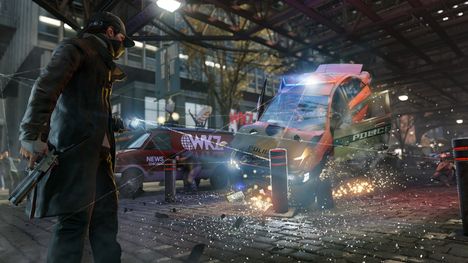
Throughout the entire game, I never lost the satisfaction of hacking into the various Chicago utilities.  Street lights, road barriers, steam pipes, you name it.  Plus, going into slow motion when you hack at just the right time?  Beautiful!

This never got old!

Alright, so I thought Watch_Dogs was a good game.  Not an amazing game, but not a bad one either.

Of course, the game looked great.  While many people felt that it didn’t look as good as it did at E3, it still was gorgeous in rain or shine (seriously, Chicago raining at night?  Hell yeah!).  Unfortunately, my PC had some problems running Watch_Dogs graphically, but it was actually this game that made me realize that my PC was overheating from dust build-up (it was randomly shutting off to prevent from overheating).  So thanks for that Watch_Dogs!

In terms of the story and characters, I felt it was lacking.  I was never really able to empathize with the characters.  They just didn’t feel real enough to tug at my heartstrings.  In contrast, I’ve been playing the Wolf Among Us and I’ve felt like a part of the story, characters, and events that have taken place.  I have a deep respect for realistically deep, complex, and complicated personas because they’re so hard to get right.  Now along the lines of story, it was unfortunately forgettable.  So much in fact that I had to watch a YouTube video as well as check out the Watch_Dogs Wiki page to remember what happened.

All that aside, it is the gameplay that redeems Watch_Dogs.  As you can imagine, hacking was the real joy that made playing so fun.  Hacking into an enemy’s ear piece, turning on a car alarm, then taking him out silently was always satisfying.  Being a Splinter Cell fan, shooting/stealth has always been an enjoyable combination for me.  In addition, the whole upgrade tree was well-done, providing the player with fun new abilities like the city-wide blackout, which I really should have used more now that I think about it.  Concerning driving in Watch Dogs, I still think it was silly that players could not shoot their guns while driving a car.  I understand that it could be game breaking (given that players would no longer be forced to use hacking), but I think it should have at least been a choice.  And while many players complained about the “stiff” driving mechanics, I felt that it got the job done and didn’t detract from game.

All-in-all, I see Watch_Dogs as being in a very similar position to that of the first Borderlands game.  What I mean is that Borderlands was, like Watch_Dogs, a pretty good game.  However, it didn’t have much of a story to keep things engaging.  So with the addition of some colorful characters and an interesting storyline, Borderlands 2 was considered as amazing game.  And honestly, I believe that Watch_Dogs could do the same thing as Borderlands.  I have a great deal of faith in the sequel and think that it’ll be a truly great game!

Episode 32: GOTY 2014 Awards!

How many hallways must a man walk down? What is the meaning of disappointment? What year is it? Matt, Ethan, Andrew and Ricardo seek to answer these questions and more as we look back at 2014 and hand out some of the prestigious Pixel Legends Awards (The Pixies). The best and worst games of 2014 will be decided in this two and a half hour epic!

Play

GOTY 2012 — Andrew: Borderlands 2

Surprised by my pick? So was I.

While I’ve always enjoyed a great Halo entry, I do not generally consider myself a fan of shooters. If you listen to the podcast, you know my preferences. Give me an open world, RPG, or action/adventure with some interesting characters, and I’m sold. And yet it was Borderlands 2 that called me back once I played through autumn’s Triple-A’s.

Borderlands 2 - Vault HuntersFirst, I must confess. The first Borderlands, although critically acclaimed,  never grabbed me. I wasn’t interested in any of the characters, the story (if you want to call it that) was uninspired and far from compelling, and the alien world of Pandora (at that time) consisted of little more than desert. Granted, I had made the mistake of trying to go it alone, but the seemingly endless loot and stylized aesthetic just wasn’t enough to win me over.

Where the first game fails, however, the second excels. With its larger scope, humorous writing, and greater variety in both its enemies and environments, Borderlands 2 proves that Pandora is worth exploring after all.

Of course, one does not simply walk into Mordor Pandora. Opposition lies behind every corner, and unlike the first outing, that opposition is given a face from the start. “Handsome Jack” is the villain you love to hate. He’s outrageously pompous, unashamedly self-absorbed, and vehemently power-hungry. And yet, much of the game’s most humorous, quotable writing is spewed from his ceaseless mockery.

The odds seem stacked against you, sure, but (hopefully) you’re not in this alone. The four (now five) playable Vault Hunters are as diverse in play style as they are in appearance.  And while their personalities are very much their own, their skills, perks, and abilities remain adaptable to your play style. For the run-and-gunners, the “gun-zerking” Salvador is your man. Me? I appreciate stealth, speed, and finesse. I rolled with Zer0.

Borderlands 2 - Train Wreck

Although the original four vault hunters from the original Borderlands are unplayable this time around, they remain integral parts of the sequel’s story. In fact, their transition into the third person is one of the main story’s greatest assets.  Witnessing them actually interact with each other, now and for the first time, adds both personality to their characters and deeper, more personal exposition.

Addressing another of the first game’s shortcomings, Borderlands 2 allows players to explore some deliciously diverse locales. Although some of the desert remains in “The Dust,” players will travel from the frigid “Frostburn Canyon” to several urban cities, the lush “Highlands,” and the acidic “Caustic Caverns,” just to name a few.

Of course, the foundational allure of Borderlands is found in the game’s vast array of randomly generated loot, varying in everything from clip size and fire rate to elemental effects and precision.  Some are even thrown, exploding upon impact every time the weapon is reloaded. Acid-spewing machine guns? Check. Electric sniper rifles? Check. Some guns may actually speak. Seriously… As in talking. To you. With words.

borderlands2.05.lg

Drop-in drop-out coop is seamless, which is great, considering the game is best enjoyed with friends.  Should you complete a mission after joining another player who is further along in the game, an impressive new feature gives you the option to skip said mission once returning to your game. I hope Bethesda takes note….

Despite some texture pop-in, and rare, random glitches, Borderlands 2 is a perfect balance of frenzied action and depth, offering countless hours of shooting, looting, and leveling, while also sporting a satisfying level of customization and an enjoyable narrative.

“So, you know,” as Jack would say, “That’s cool. Kay, bye.”